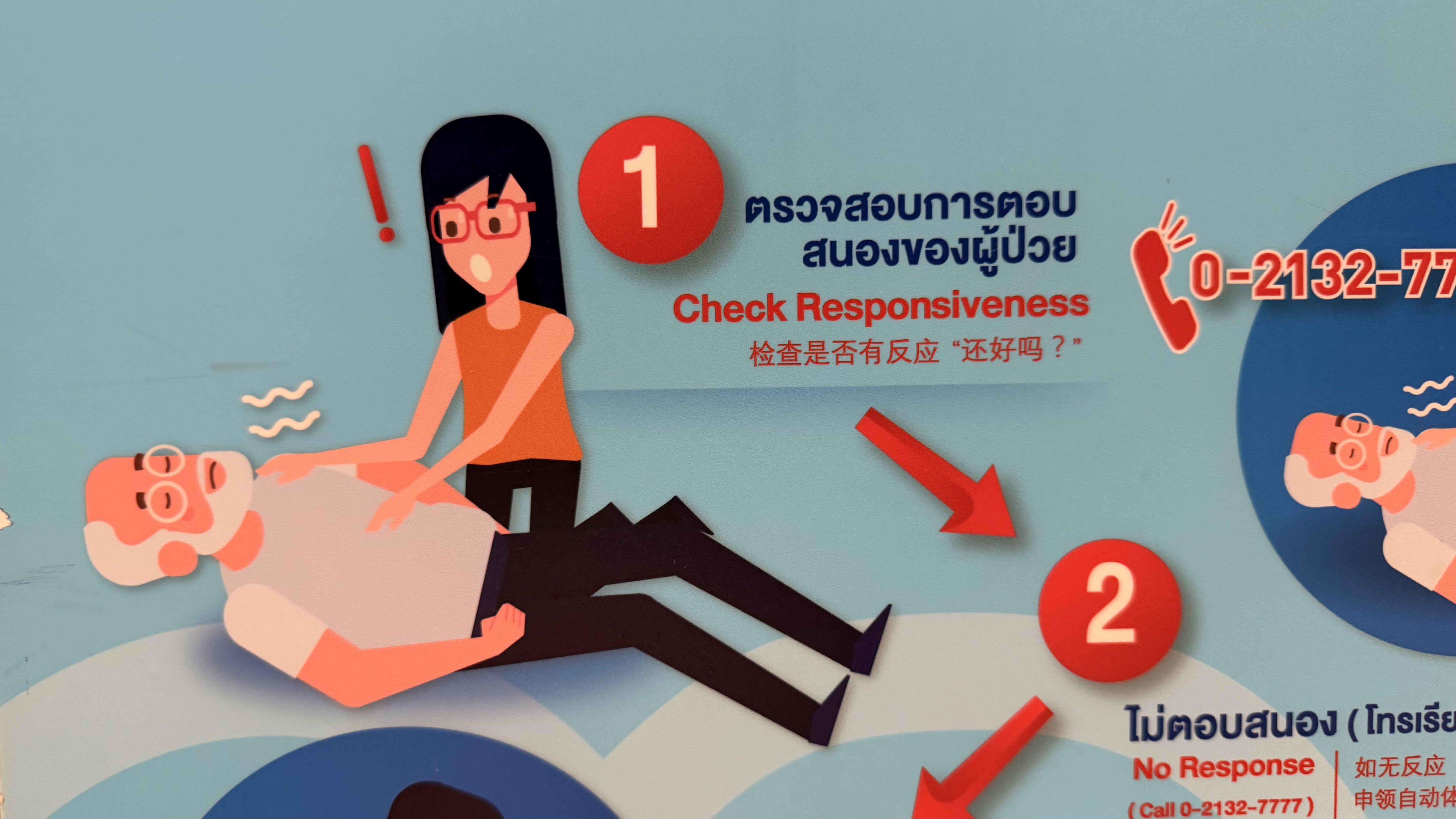
Make the scene safe and check responsiveness.
Tap the shoulders, shout, and look for normal breathing. Occasional gasps are not normal breathing.
For patients and bystanders
No kiss of life. No mouth-to-mouth requirement. You cannot make a dead heart worse by pushing on the chest; the common fatal error is waiting, checking too long, or not using the AED.
The first 5 minutes
Tap the shoulders, shout, and look for normal breathing. Occasional gasps are not normal breathing.
If other people are nearby, give clear jobs: “You call. You get the AED. You wait for the ambulance.”
Hands in the center of the chest. Arms straight. Shoulders above hands. Push at least 5 cm, avoid going beyond about 6 cm, and let the chest come all the way back up.
Do not stop to check repeatedly. Stop only when the person wakes or breathes normally, the AED tells you to pause, emergency responders take over, or you are physically unable to continue.
Turn it on. Bare the chest. Stick the pads on as shown. Follow the voice prompts. Resume compressions immediately after a shock or “no shock advised.”
100 BPM
This original beat is set to 100 per minute. Familiar 100-120 BPM songs can help memory, but the emergency task is not singing; it is steady, deep compressions.
100/min is one compression every 0.6 seconds. Good CPR feels tiring quickly.
Compressions only?
For an adult or teen who suddenly collapses, especially from a likely heart rhythm problem, continuous chest compressions are simple, safer for the rescuer, and effective while waiting for help and the AED.
If you are not trained, not willing, do not have a barrier mask, or feel unsafe giving breaths, keep compressions going. Do not pause CPR because of mouth-to-mouth concerns.
Important exceptions remain: drowning, choking, opioid overdose, severe breathing problems, and babies or children. In those situations oxygen can be more important, so follow the emergency dispatcher. If breaths are not possible, compressions are still far better than doing nothing.
When breaths might matter
The first rule is action. The second rule is that some arrests are oxygen problems first.
Current guidance
Finding an AED
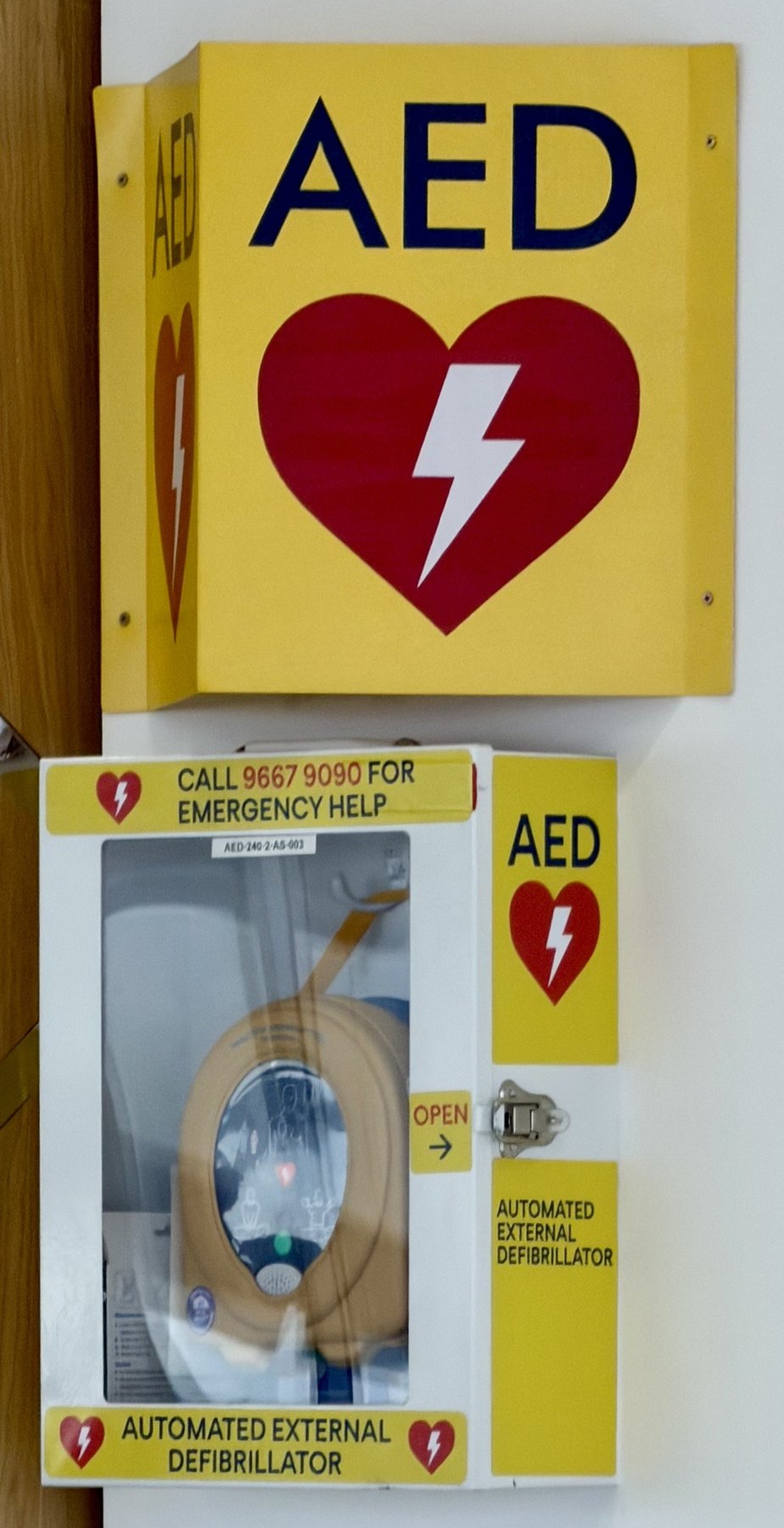
Many AEDs are in airports, gyms, schools, workplaces, shopping centers, hotels, transport hubs, and apartment buildings. Some are inside locked cabinets or locked inside buildings after hours; the emergency dispatcher may know access codes in many regions.
There is no reliable worldwide AED system, and many countries do not have a dependable countrywide public AED map. AEDNear.com is an honest directory of useful public registries found so far, not a guarantee that an AED is reachable now.
Google Maps often misses AEDs or shows suppliers. Ask emergency dispatch, staff, security, reception, and bystanders too.
Numbers
Reducing risk
Age, previous heart attack, coronary artery disease, heart failure, inherited rhythm or heart-muscle conditions, diabetes, kidney disease, smoking, high blood pressure, high cholesterol, stimulant drugs, and some medications can raise risk.
Chest pain, fainting during exertion, unexplained palpitations, heart failure symptoms, or a family history of sudden death deserves medical review. After a heart attack, the first six months are a higher-risk period.
Do not smoke, control blood pressure and cholesterol, treat diabetes, move regularly, sleep, reduce excess alcohol, eat mostly unprocessed foods, and take prescribed heart medicines.
Sources