Call
Call your local emergency number on speaker. Say: “Unresponsive. Not breathing normally. Starting CPR.”
Call emergency servicesDetecting local emergency number...
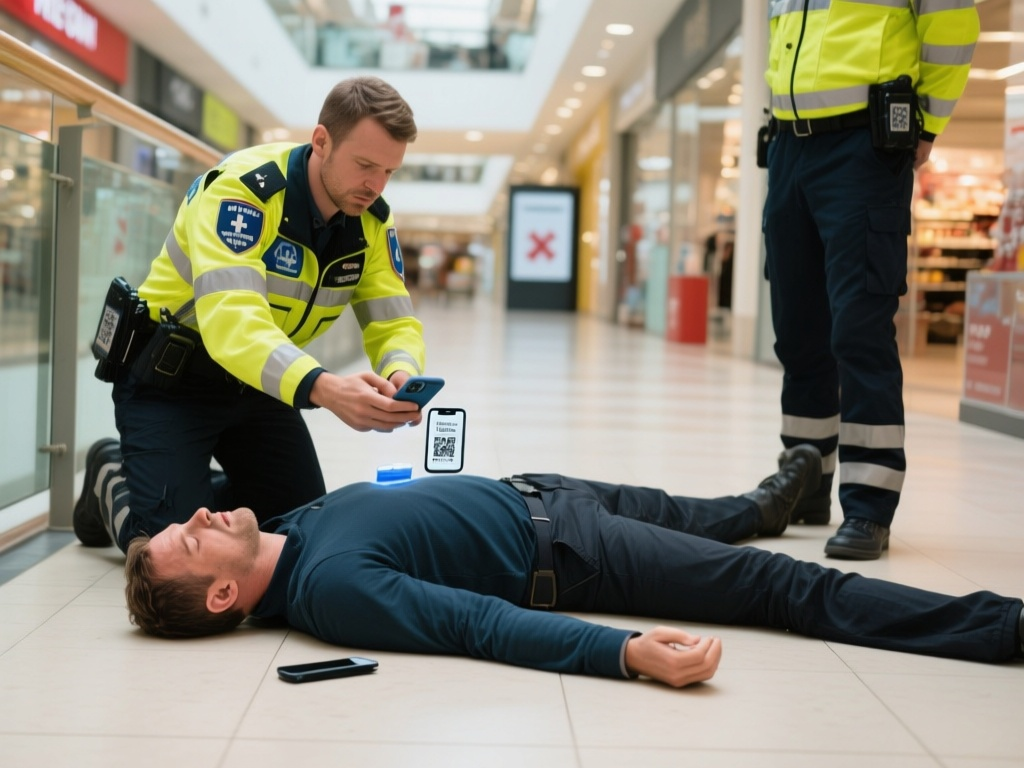
Out-of-hospital cardiac arrest
ResusCue.com
ResusCue is the cue to act: call emergency services on speaker, push hard and fast in the center of the chest, and send someone for an AED. If you are a complete novice, do not worry about breaths.
Do this now
Call your local emergency number on speaker. Say: “Unresponsive. Not breathing normally. Starting CPR.”
Call emergency servicesDetecting local emergency number...
Hands in the center of the chest. Push hard and fast, 100-120/min. Let the chest come all the way back up.
Send someone to get a defibrillator. Turn it on. Follow the voice. Resume compressions after every prompt.
AEDNear.com is the cue: find an AED near me.
AEDNear.com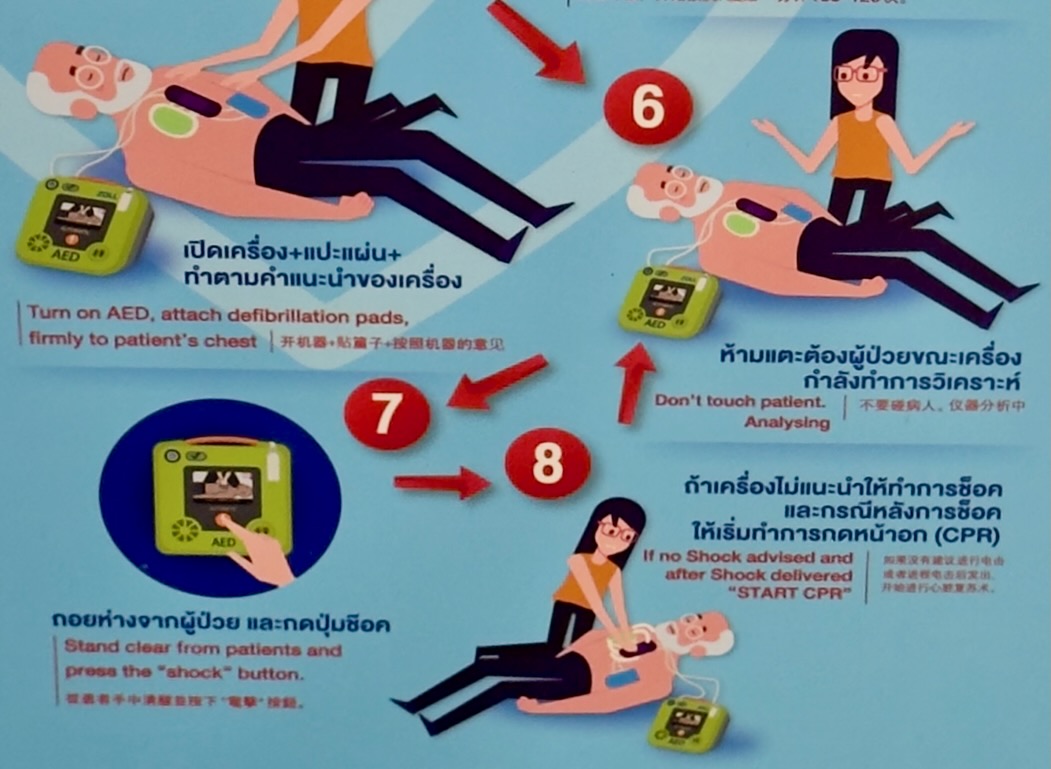
Complete novice rule: keep compressions going until the person wakes, an AED tells you to pause, emergency responders take over, or you cannot continue. Breaths are optional only when trained, willing, safe, and not delaying compressions.
Training rhythm
Keep time to the sound at 100 compressions per minute: push, release, repeat.
Push, release fully, push again. Change rescuers about every 2 minutes if another person can take over with minimal pause.
Tap the shoulders and shout. If the person is unresponsive and not breathing normally, or only gasping, assume cardiac arrest.
Put the phone on speaker. Point to one person to call emergency services and another to bring the nearest AED.
Heel of one hand in the center of the chest, other hand on top. Push 5-6 cm deep, 100-120/min, let the chest fully recoil. No breaths if unsure.
Turn on the AED and follow its voice prompts. It will only advise a shock for rhythms it can treat.
Latest guideline consensus
Across major 2025 and current international guidance, the practical public message is consistent: if a teen or adult suddenly collapses and is not breathing normally, start chest compressions immediately. Rescue breaths are not required from an untrained, unwilling, or unsafe lay rescuer.
The clean public-facing rule for sudden adult OHCA is: compressions now, AED now, breaths only if trained, willing, and safe. For children or respiratory causes, follow dispatcher instructions because oxygen can matter more.
Special situations
Best novice action: call, continuous compressions, AED. This is the classic hands-only CPR situation.
Breaths can matter because many pediatric arrests start with breathing failure. If you are untrained or panicking, compressions are still far better than stopping.
Oxygen matters more here. Follow dispatcher instructions. Trained rescuers should add breaths or naloxone where appropriate.
Do compression-only CPR. The goal is to prevent hesitation, rescuer exposure, and long pauses.
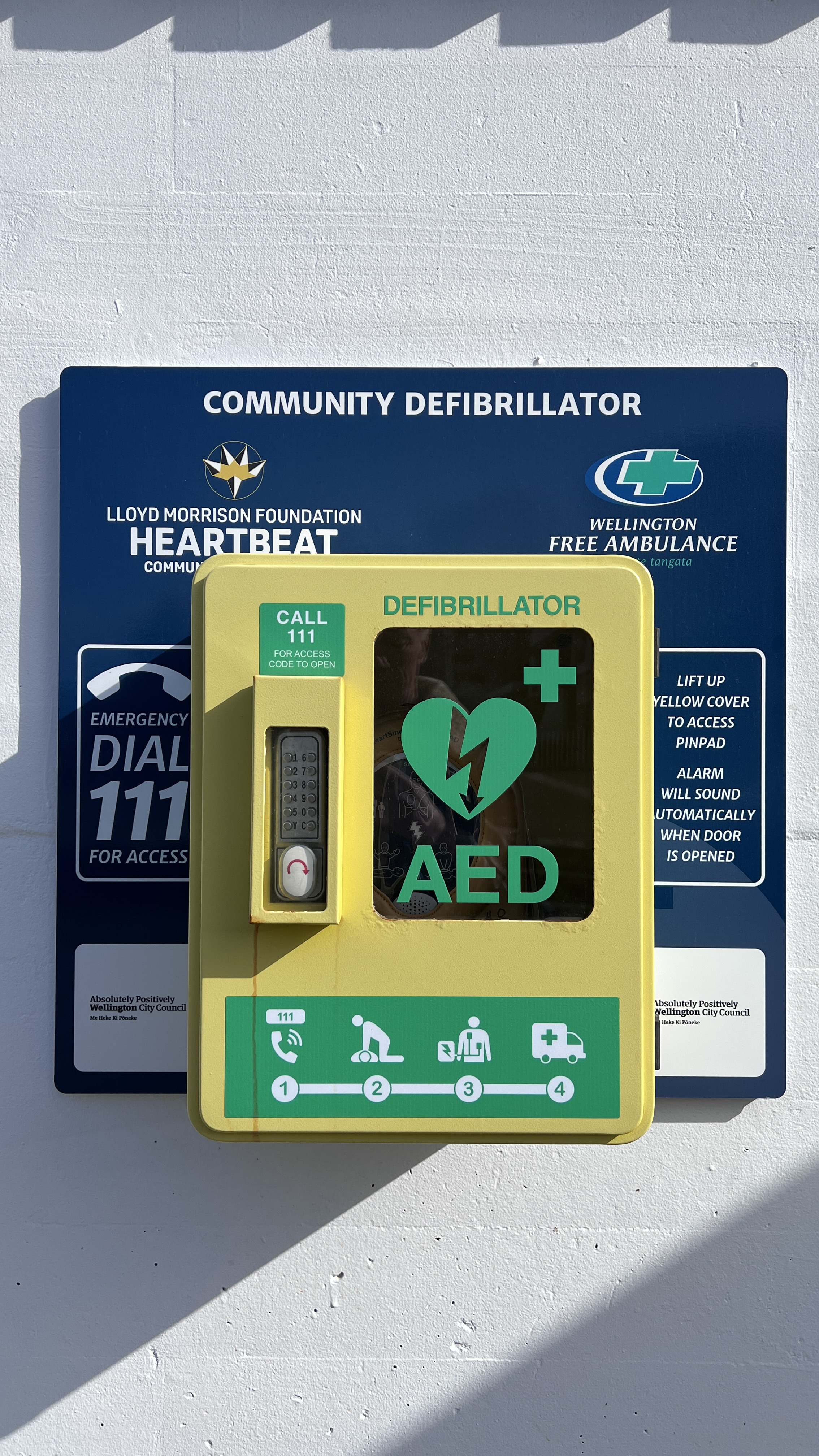
AEDs
AEDs are designed for public use. Open the lid or press power, expose the chest, attach the pads as pictured, and follow the voice prompts. Keep compressions going except when the AED tells everyone to stand clear.
There is no reliable worldwide AED system, and many countries do not have a dependable countrywide public AED map. AEDNear.com lists useful public registries found so far, but a mapped AED may still be locked inside a closed business, airport area, school, office, gym, hotel, or shopping centre.
Google Maps often misses AEDs or shows suppliers. Ask emergency dispatch, staff, security, reception, and bystanders too.
Why speed matters
Patients
For a sudden adult collapse, hands-only CPR is the simplest and most important default: keep blood moving and get the AED on. Dispatcher instructions override web pages.
Open patient pageDoctors
The clinician page covers Utstein variables, shockable rhythm, oxygen targets, cath lab pathways, thrombolysis, ECPR, mechanical support, neurologic outcomes, and survival endpoints.
Open doctor pageSources