Rate and depth
Manual compressions at 100-120/min, depth at least 5 cm in the average adult, avoid excessive depth over 6 cm, and allow full recoil.
For doctors and clinicians
Initial rhythm, witnessed status, bystander CPR, defibrillation interval, low-flow time, etiology, and post-ROSC physiology dominate prognosis.
Registry context
Basic life support
Manual compressions at 100-120/min, depth at least 5 cm in the average adult, avoid excessive depth over 6 cm, and allow full recoil.
Minimize interruptions. AHA describes a chest compression fraction of at least 60% as reasonable; many high-performance systems target higher when feasible.
Hands-only is appropriate for untrained, unwilling, or unsafe lay rescuers after sudden adult collapse. 2025 AHA and ERC still allow or encourage breaths for trained rescuers, and respiratory/pediatric etiologies need ventilation earlier.
CPR plus early shock for VF/pVT is the time-critical pair. CARES 2024 reported 47% discharge survival when bystanders delivered the first field shock.
Guideline comparison
Bystander timeline
Capture last known well, witnessed status, bystander CPR start, first AED attachment, first shock, EMS arrival, first rhythm, airway and ventilation interventions, epinephrine timing, ROSC timing, re-arrest, transport timing, and presumed etiology. This is prognostic information, not clerical detail.
Post-ROSC
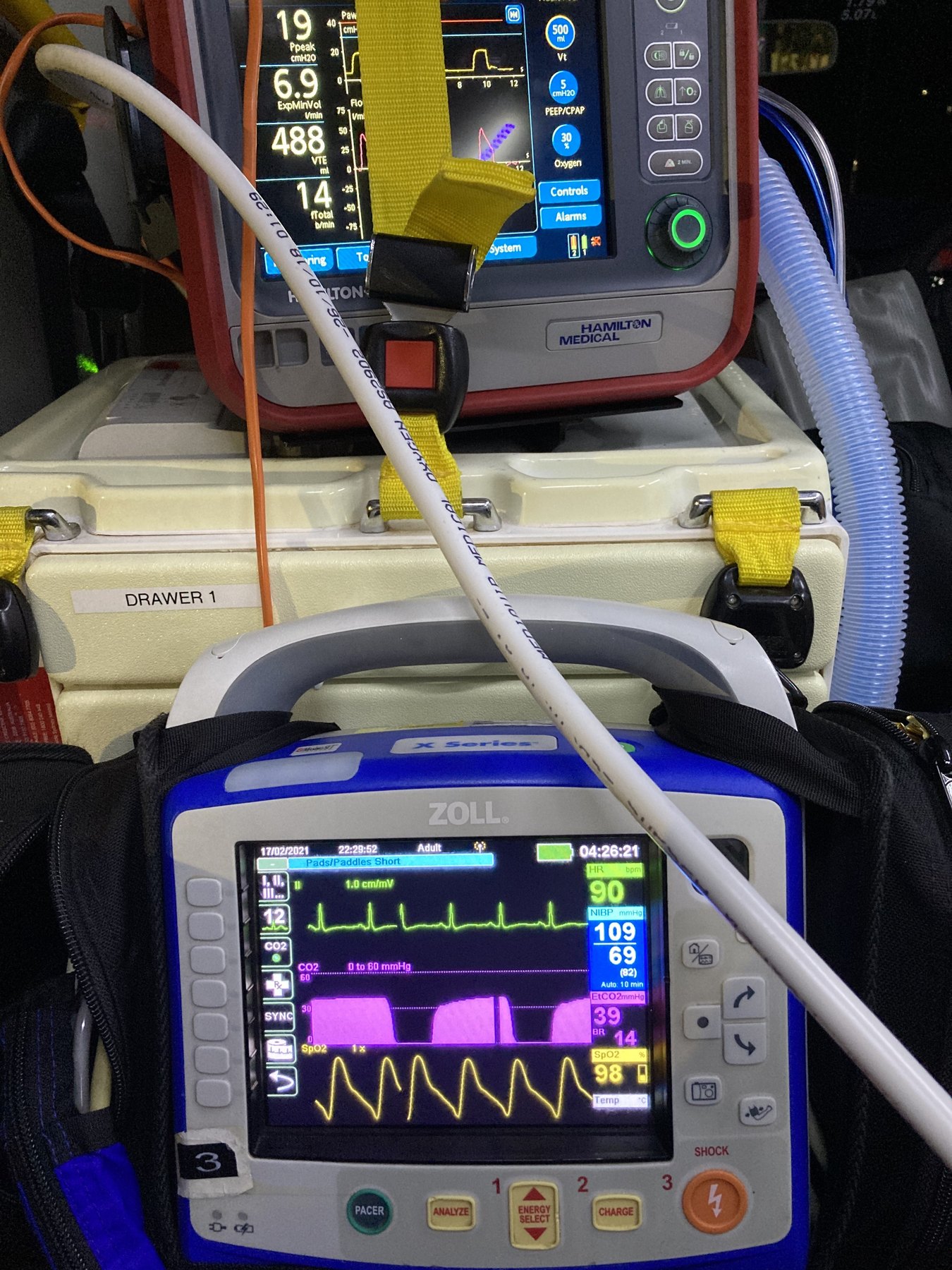
Use 100% oxygen until reliable saturation or PaO2 measurement is available. Then avoid both hypoxemia and hyperoxemia; ILCOR suggests SpO2 94-98% or PaO2 about 75-100 mm Hg when measurable.
Target normocapnia unless patient-specific physiology requires otherwise. ETCO2 may not reflect PaCO2 reliably post-arrest, especially during transport or poor perfusion.
STEMI or high suspicion of acute coronary occlusion should trigger urgent cath lab evaluation. Shockable arrest, recurrent VT/VF, cardiogenic shock, or electrical instability may still justify early invasive assessment.
Delay definitive prognostication, avoid fever, treat seizures, correct hypoxia/hypotension/hypoglycemia, and use multimodal assessment rather than early examination alone.
Advanced therapies
Consider reversible causes. Thrombolysis is not a generic OHCA treatment, but may be lifesaving when massive PE is strongly suspected and arrest/shock persists. Bleeding risk and diagnostic uncertainty are central.
PCI addresses acute coronary occlusion. IABP, Impella, VA-ECMO, or durable LVAD pathways may be relevant for selected cardiogenic shock phenotypes after ROSC or during refractory arrest in specialist systems.
Prehospital or ED ECPR, including programs described in Paris and other metropolitan systems, is promising for selected refractory arrests: witnessed, short no-flow, high-quality CPR, often shockable rhythm, and rapid cannulation. It is not a substitute for public CPR/AED coverage.
One-year survival
Many public registries report ROSC, admission, discharge, 30-day survival, and CPC or mRS at discharge/30 days. One-year survival is less consistently captured and is highly selected by discharge neurologic status, rhythm, etiology, age, comorbidity, post-arrest shock, and rehabilitation access.
For public education, discharge survival plus favorable neurologic outcome is usually more interpretable than ROSC alone. ROSC is a process milestone; it is not patient-centered survival.
Sources